

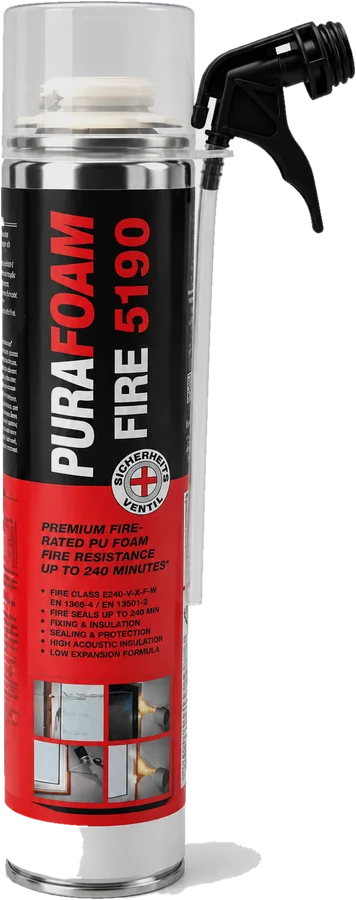
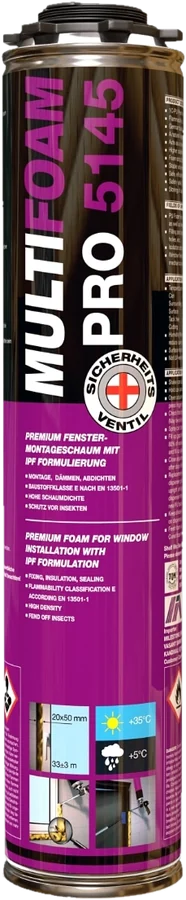
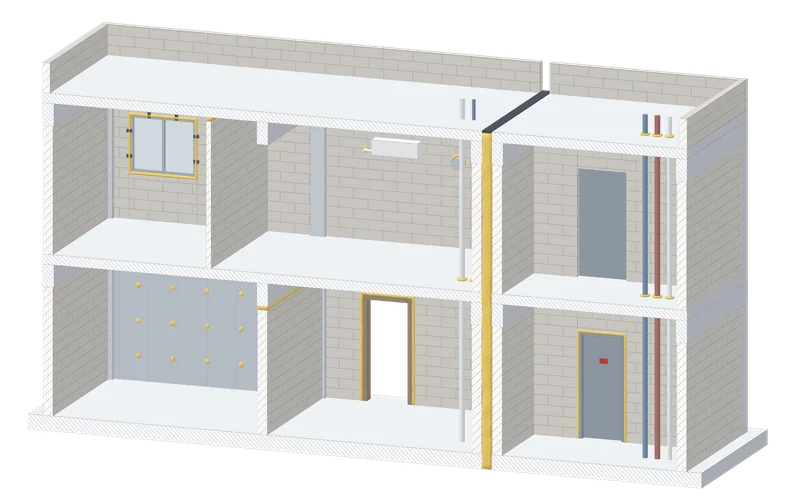
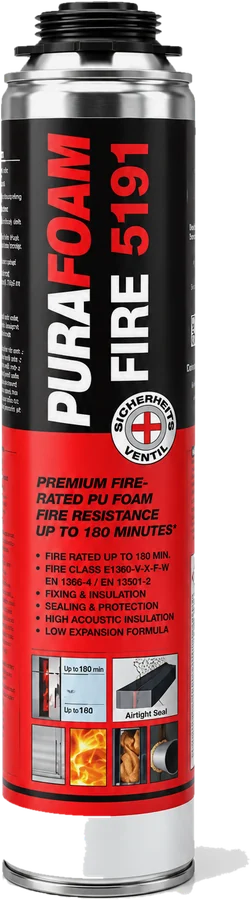
PU foam is one of the smallest items on any site. That is exactly why nobody thinks about it.
But the wrong can does not stay small. Windows lose their seal. Gaps open around pipes. Frames loosen. And the fix costs far more than the foam ever did.
Most buyers still compare only one thing: the price on the can. The price on the can tells you nothing about what the foam will cost you on site.
Here is a simple test. Try it once.
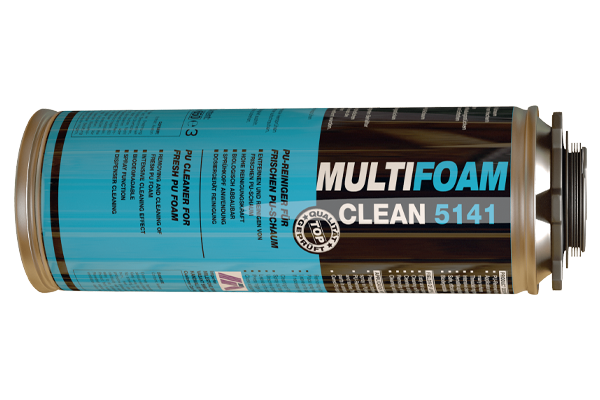
- Buy 12 cans of any other brand
- Buy just 4 cans of MULTIFOAM
Use both on the same site. Then check:
- How much each can covers
- How hard and strong the foam is after it sets
- How well it holds, and how much is wasted
- How long it lasts
- And the big one: how many cans did it take to finish the job?
You will see that MULTIFOAM uses fewer cans, holds stronger and lasts longer. And it costs you nothing extra.
One more thing you should know
Not all PU foam is the same formulation. In Germany and Europe, foam is classified by fire behaviour under DIN 4102: B1 (flame-retardant), B2 (normally flammable, the minimum permitted in construction) and B3 (highly flammable, meant for marine and general-purpose use, not buildings). Other countries follow different standards, but the principle holds everywhere: the formulation matters.
A contractor is not expected to know all this. But the foam that goes into your windows, walls and pipe openings is usually his pick. And his pick is almost always the cheapest can. That is rarely the safest one.
So ask one question: which foam is going into my project?
Happy to set up a demo on your site or share Multifoam user client references and testimonials for your reference.